Friday, 11 July 2014

How far is the island?


A week or so ago I posed the following problem:  You are stuck on an island inhabited by man-eating crabs. Unless you swim to another island you will be eaten.  The problem is, you can't tell how far away the island is.  Is it two kilometers or five?  Knowing the distance with reasonable accuracy may be the difference between making it or not.

 How do you determine how far away an object is when you are unable to directly measure it?

Well this is where maths is so cool.  Maths allows you to reach beyond the mortal coil, to see into the future and stretch beyond your physical limitations.

I asked my children how they would work out how far the island was.  One said you could observe how fast the shadow of a cloud moved, and time it, as it traveled the distance.  Awesome.  My second eldest said you could use the sun traveling across the sky as a sort of timer and convert it to distance.  Very nice idea also.

There is another way.  It involves a right angled, 45 degree triangle.  That's a square folded in half for the uninitiated.  A VERY useful shape.  I cannot be bothered  writing down how I would do it - however I do want to amaze you with my brilliance so I'm going to have another go at a video.

A note:  I am a poor student.  I don't have ANY high-tech gadgetry.  This clip is raw.  But I have filmed in shaky cam style to provide some realism.  Think 'Blair Witch project' or 'The Borne Identity'.  In other words- sorry about the quality.  Also- I can only upload 2 minute clips (Errr), so it is in two two minutes blocks.


So there you have it - I hope that gives you an idea anyway.  If we know the length of one side of a right angled triangle and one of other angles we can determine the length of any side.  The 45 degree triangle rocks.  You can use it to work out how high cliffs are, trees etc.

This is essentially the system the navigators on ships would use.  They had Sextants that would work better than my bamboo square - but the same fundamental idea.

My question to you is this... What kind of scenarios might get your children/adult learners (or you) interested in exploring this concept of distance estimation further?

I may put up a learning plan in coming weeks as to how I begin to develop interest and knowledge of trigonometry with learners.


Thursday, 3 July 2014

Why maths counts part three


Due to some unexpected circumstances you and your work mate find yourselves on a deserted island. Unfortunately, the island is covered in deep holes that look much like rabbit holes.  You have peered down them but are a bit chicken to go poking sticks down there.

Alarmingly, you find out the first night that the holes are occupied by man-eating crabs.  The crabs emerge, attack on mass and drag your fellow companion down the holes - In bits.  Brian paid the ultimate price for you to have one extra day alive.  However, tonight they are coming for you.

You must get off the island before dark.

As you stand on the shore you notice an island off in the distance.  It looks beautiful and safe.  You wonder how far it is?  Could you swim to it?  How far is too far?  Very hard to judge distances on the sea.


The non-maths scenario

You find the of idea avoiding being eaten by crabs quite motivating.  Yet, it's hard to tell how far that island it.  It could by one kilometer or it could be four.  It would suck to get halfway and run out of gas.

You hope for the best and start swimming....

It turns out your distance estimation was quite wrong.  The island never seems to get any closer while your own island gets smaller every second.  Lets just say, it doesn't end well.

The 'I'm pretty awesome at problem solving scenario'.


Actually, I'm not going to describe this one.  I'm going to ask you instead - Is it possible to work out how far away the island is?  Is it possible to work it out within a reasonable range of accuracy?

I think it is possible.  My technique involves fashioning a 45° ruler (which you could make from sticks right?) and applying a bit of creative thinking.  With a little MacGyver'ing' you could do it.

I would love your ideas or your kids ideas - especially the older kids.  Please ask you kids (show them the picture) and see what they say.  It may surprise you.

This might help to get the juices flowing - can you work out how high a tree is from the ground - without climbing it?  (Yes you can).


Think trigonometry.  But even if you don't know trig you can still work it out.

I would love to know how people would work out far away the island is.

Good luck - I'll post my answer in a day or two.    


Sunday, 29 June 2014

Design

Several people have mentioned that white type on a black background is a bit of a mission to read.  I'm going to try a few new design ideas.  The current one is temporary - but should be easier to read.

Actually, this purple thing going on is giving me a headache.

Thursday, 26 June 2014

Anxiety - why smart people crumple under pressure

Big toe - shoe - rub.

The other day I wrote a post about some of reasons smart people perform poorly.  We looked at the 'stereo-type effect' and in particular 'self threat' and 'group threat' and how smart people perform worse in maths tests when they know their scores will be made public and represent a group they associate with.  

The final point of the post was that the 'meaning' you place on your performance will determine part of your result, positive or negative. 

However, the way these things negatively impact you is through one mechanism -Anxiety.  Anxiety is your enemy.   

So what is anxiety, how does it impair performance and how do you stop it?

What is it?

Hard to define but essentially it is a physiological response to an anticipation of harm.  There are two things happening.  First, you sense potential harm.  This may be harm to your body, or harm to your reputation, self-identity or self-image.  Then the second part is that your body responds physically to prepare you for action.

How does it mess you up?

Your brains ability to think can be divided up into working memory and long term memory.  The working memory is used to accesses information from the long term memory, hold the information, move it around, and think about it.  Working memory has several parts including a specialized part for imaging and another for sound buffering and an episodic buffer.  The working memory is limited.  It can only do so much before it is running at full capacity (say the alphabet backwards while adding random numbers).  Anxiety erodes your working memory.  The more anxious you get, the more erosion occurs - Ultimately it reduces you to a state of pure reaction and zero planned strategic action.  You lose the ability to access information and use it to make decisions.

If you need to run away from a mugger - it is perfect - just let that body react.  If you need to win a game of cards - you are doomed.

What else?

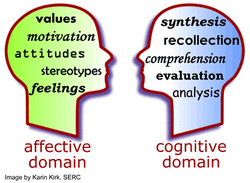
 There are two types of anxiety.  Both reduce your mental resources dramatically.  It happens via two separate yet interrelated domains.  One through your affective domain (feelings) and through the cognitive domain (thinking).  Within the affective domain (usually associated with math anxiety) a person has an affective reaction to stimulus (emotional).  That is they 'feel' unpleasant feelings and subsequently incur an erosion of working memory (sometimes likened to a panic attack, but often mild).

Math anxiety erodes working memory which makes thinking difficult which leads to failure which leads to an increased focus on the unpleasant feelings and hey presto - they are a quivering mess. This is common for people who fear looking less smart than their managed self-image (losing status).  Ironic because it becomes a self-fulfilling prophecy.

The other aspect of anxiety is cognitive and is associated with test anxiety.  This causes people to think about the consequences of their failure.  They begin to focus on this, they engage in self-ruminating thoughts and subsequently pull precious resources from the task to thoughts of the consequences.  This is common in smart people doing high stakes testing.

The double whammy of feeling anxiety and thinking about what will happen if you fail - destroys people.

Lets mess with Larry

So let reduce Larry (a trainee teacher) to a quivering mess.  Here is how will we do it.

Get a classroom full of trainee teachers.  Tell them that they must be good at maths to teach children.  Lay it on think how poor teachers produce children who are bad at maths etc.  Don't let the teachers speak to each other.  Larry is not so good at maths so the last thing he wants is his colleagues to know this.  Larry is desperate to not be labeled bad at maths.  He is now thinking about his performance and wondering if he really is good or bad at maths (we have turned his attention onto himself).

Next the lecturer writes a maths problem on the board.  It is hard and Larry is not sure of the answer.  Lecturer says,"We'll start with an easy one.  This is a maths question that most 12 year olds will be able to work through.  I want one of you to come up the front and solve it".

There are the two things happening to Larry.  First his body temperature has risen, as has his heart rate, chemicals are being released in his brain that limit his working memory as they divert resources to reactive processes.  Second thing, Larry is thinking about what will happen if it is him that gets picked.  What will happen if they all find out he is no good at maths.  What will it feel like when he can't solve the problem with all those people watching him?  What new career will he get now he can't be a teacher?  How stupid and pathetic is he going to look?

The lecturer looks over the class and ... points to Larry.  "Larry, come and do this one, show us how you would solve this on the board".      
Someone else in the class says "Lucky you got the first easy one Larry, the next person will get the hard one".

Larry realises that he is about to be exposed.

Poor old Larry has two problems.  First his brain is preparing him for physical danger.  He has lost the ability to access information and use it to solve anything.  Second, what is left of his thinking ability is consumed with thoughts about what is going to happen.  If you haven't noticed, Larry has not even really thought about the problem on the board.  It could be 55 + 55 for all he knows.  But it doesn't matter because Larry gets to the front of the board and can't even think anything except how to get out of here and save some face.

 Later that night Larry sits in his room and looks at the same maths problem and solves it easily.

We turned Larry's brain around so that instead of focusing on the maths problem he focused on himself.

The truth is we can do this to anyone we want - no matter how confident they are.  We just need to find the right situation and stimuli.  Worse yet, the more it happens to you, the more it becomes an model , a pattern and an expectation, and remember anxiety begins with an expectation of harm.  If it happens twice, it'll happen three times.

The anxiety response is entirely predictable and therefore NO educator should be putting anyone in this position.

Next post - Beating anxiety

Most of the information on beating anxiety is rubbish written by people who have never felt it.  I'll give you the real secret in the next post.


Think about what happened to Larry and think about how you could interrupt the process.

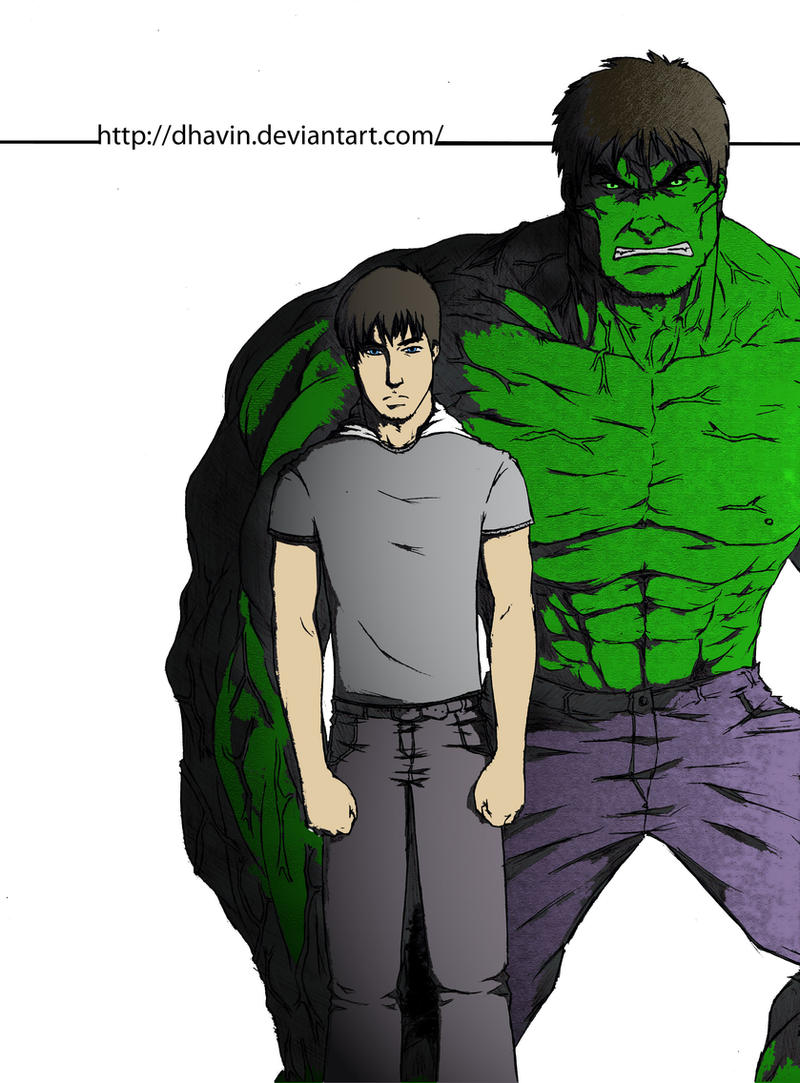
Final note:  Bruce Banner turns into the Hulk when he senses danger.  Anxiety is a trigger - Yes in true scientific fashion Bruce's body interprets anxiety (and its precursors) as danger.  Who's brain would you rather have if you were playing chess, the Hulks, or Bruce Banners?


big toe - shoe - rub


Tuesday, 24 June 2014

Bearapocalypse final


A week ago I posted a numeracy problem in which a water tank needed to be filled by two people.  It was imperative that the tank be filled within two hours or less or the world would essentially end.  You can read the post here and have a go at the problem.

One person could fill the tank in three hours (Karl).  The second person could fill it in five hours (Larry).  The question was:  If they work together how long will it take them?

This is a TOUGH question.  But here are some tips.


  1. If fractions freak you out just don't use them.  Turn them into decimals immediately by dividing the top number by the bottom on a calculator.  Easy.
  2. If you want to keep fractions but hate adding them - just type the sum into into Google and you get your answer!  Yes, Google does add fractions.  Just type, 'one-third plus one-eighth'.  Cool huh.


Okay - the problem solved my way -  Think about how much of the water tank Karl and Larry will fill in one hour.

Here is how I approached it.

1.  In one hour how much of the tank does Karl fill?.  Answer one/third (or .333)
2.  In one hour how much of the tank does Larry fill?.  Answer one/fifth. (or .2)

So if these two chaps work together, then in one hour the tank has one/third plus one/fifth in it (or .333 + .2 = .533).

The answer in fraction language is eight-fifteenths or if you want to turn it into decimals = 0.533.

Okay, so in one hour Karl and Larry have it a little over half full.  So there you have it - if they can fill it above halfway in one hour then it is definitely full in two.  Don't over think it.  Will they be back in two hours? Yes.

If you want to be a genius you may want to work out exactly how many minutes it will take them to fill the tank.  Well, it took one hour (60 min) to fill eight-fifteenths.  So how long to fill up seven-fifteenths?

I guess we have to work out how many minutes each of those eighths took?  60 divided by 8 = 7.5.  So 7.5 minutes to fill one-fifteenth.  How many minutes to fill fifteen-fifteenths?  15 times 7.5 = 112.5 min.

Okay, clearly this is a tough one. But keep in mind - the future of the human race depended on it.  So when the apocalypse happens are we all going to look at each other and say 'Who's good at maths?'.

I know in every movie there is always that one geeky guy who can do the math - but what if the job falls to you?

Side projects...


As you know, as well as working to complete a PhD I also deliver workshops to educators across the country.  But I also have a few little side projects on the go. One in particular, is the development of a revolutionary type of resource designed to engage people of all ages in mathematics - so that anyone can taste the joy of maths - and come back for more.

Recently. I have tested the materials on the toughest most disengaged adult learners - And they loved it.  I have tested it on children of various ages and they loved it.  Last week, I ran another little test and used one of the resources in a workshop with tutors.  Again - they loved it.

I might be on to something here.  It does appear that your average person does enjoy maths if it is presented in certain ways.

Anyway, today I am off to Palmerston North.  I may try out another resource with this group and see how it goes down.  (Update - it went very well).

The paradigm of the resource is different from other maths resources I've seen or used.  Basically four key features dominate 1. Identity shift. 2. Fun, 3. Engagement, 4. Satisfaction.  Who you'da thunk it'd be so successful?

People like math.

Saturday, 21 June 2014

Funny


So this clip just cracks me up.  A group of parents get their kids pretend to be various things or scenarios (in this case a maths class).  They record it and then act it out using the same recording.  What you get is how kids see the world, acted out by adults.

Why I like this clip is because I have actually seen many, many lessons go like this!  I kid you not.  As you watch, understand that this really happens between teachers and students.

Gotta love it.  Anyway enjoy.

Hat tip - Graeme Smith